
How do you cope with a serious injury mentally?
A serious injury is a loss, and it produces grief, not just inconvenience. Expect fear, anger and disbelief alongside the physical rehabilitation, and expect the psychological load to be at least as heavy as the physical one. What helps is separating what’s within your control from what isn’t, then putting everything you’ve into the first list.
I destroyed my wrist in a freak weightlifting accident.
You know it’s bad when the level of interest in your x-ray makes you a celebrity around the ward. It got worse when I mentioned I had a video of it happening, and the doctors started queuing up to watch. Several asked me to send them a copy.
One surgeon told me he had undergone similar surgery, and showed me the movement he had recovered. That had to be a good sign.
Then the hand therapist, an expert at the top of her field, described what was ahead of me. She used the word never. She also asked for a copy of the video, for teaching purposes.
That wasn’t the same injury as the surgeon’s. That was unique.
The last thing you want to be, in a hospital, is unique.
The surgeon described the injury as catastrophic. He said I’d likely never do a push up again.
My response was two words. We’ll see.
What does an injury like that do to you?
Not what people think.
Everyone assumes the hard part is the pain and the physiotherapy. The hard part is what happens in your head at three in the morning.
Less than forty-eight hours after the pins came out of my wrist, they removed the dressings and asked me to test my range of movement for the first time.
Nothing happened.
My brain was telling my wrist to move. There was nothing there.
Here’s what I wrote that morning, more or less as it came out. Part of me couldn’t help thinking, what if they were right. Part of me was in disbelief. Part of me was being the voice of reason and calming everybody else down. Part of me was already grieving without knowing what for. Part of me still wanted to prove everyone wrong.
But most of me was just scared.
The fear was real. The emotion was real. And that was fine.
That’s not a triumphant paragraph and it’s not supposed to be. That’s what it looks like from inside, and if you’re somewhere similar right now, I’d rather you had the accurate version than the highlight reel.
Why does it feel like grief?
Because it’s grief.
You’ve lost something. Not a person, so nobody sends flowers and nobody expects you to be a mess. But you’ve lost your body doing what you tell it to. You’ve lost the thing you did to manage your head. You’ve lost your independence in small humiliating ways, and probably some income.
You’ve also lost a version of the future you had assumed was coming.
The things I actually missed were specific and stupid. Being able to move however I wanted. Being able to throw myself at something fun without first calculating whether it would destroy me. I was exhausted by having to consider every single movement in order to protect the injury.
Doubt, fear, frustration, anger and grief are formidable enough on their own. Together they form an alliance that’s very hard to hold off.
The internal commentary escalates accordingly. Why did I do it. Why did I even try. What if I never recover. What if I can never do the things I love again. You’re so stupid. You deserve this.
That voice isn’t information. It’s just loud.
So what do you do with a prognosis?
This is where I’ve to be careful, because the easy version of this story is a bad one.
I didn’t ignore the experts. That’s what the inspirational version would say, and it would be wrong, and it would get somebody hurt.
What I did was refuse to accept a ceiling before I had tested it, while doing every single thing I was told to do.
I also went and found more people. The professionals treating me did not know my history with injury and recovery, did not know my motivation, and were not especially interested in either. That is not a criticism of them. They were applying a standard framework, which is exactly what a standard framework is for. But I wanted people who would apply context to my situation, so I recruited them. There were no fewer than a dozen medical professionals involved in a rehabilitation process that would ordinarily have three.
I asked questions that pushed what my team knew. Everyone was learning.
And about four months in, I got it wrong.
I was making rapid progress, I was excited, I felt no pain, and I decided that meant I could push. I confessed to my physio that I was scared I wasn’t doing enough, and was told plainly that I was doing plenty, and that what I needed to do was slow down.
Slow is smooth, and smooth is fast.
That was humble pie. It was also the most important conversation of the whole process, because ignoring it would have cost me everything I had built. It wasn’t a step backwards. It was the part where I dropped the ego and listened.
The pull ups could wait a little longer.
What happened?
Forty-five weeks after being told I’d likely never do a push up again, I did one on one hand.
The injured one.
I want to be careful about what that does and doesn’t prove. It doesn’t prove that positive thinking beats medicine, and it’s not a promise that anyone else will get the same result. Bodies are different, injuries are different, and some prognoses are exactly right.
What it proves is narrower and more useful.
I couldn’t control the injury. I couldn’t control the surgery, the biology, or the timeline. What was mine was the rehab, the discipline, the patience and the vigilance. So that’s where everything went.
At various stages I was hitting milestones around three times faster than expected. Not because I was special. Because I put absolutely everything into the only column that was ever mine.
The comeback is always stronger than the setback.
But that’s not a slogan. That’s the outcome of about a year of doing unglamorous things nobody watched.
Do the work
- Write two lists. What is mine here, and what isn’t. Surgery, biology and timeline go in the second list. Rehab, sleep, food, attitude, showing up and asking questions go in the first. Then put everything into the first list.
- Write the fear down. All of it, unedited, no reader. Thoughts moving too fast to be examined get believed instead. On paper they can be looked at.
- Recruit the team you need. If nobody has asked what you want to get back to, tell them. If they’re not interested, find people who are. That’s not being difficult. That’s being an informed patient.
- Do exactly what you’re told, and then some. Not more than you’re told. That’s how people go backwards.
- Name it as grief. You’ve lost something. Treating it as an inconvenience is why it keeps ambushing you.
This week: write down the two lists. What is mine, and what isn’t. Ten minutes.
Frequently asked questions
Is it normal to feel depressed after a serious injury?
Very. A significant injury takes your physical capability, your routine, often your income and usually the main way you managed stress, all at once. Low mood, fear and anger are common responses. If it persists or deepens, a GP is the right person to talk to.
Why does an injury feel like grief?
Because it’s a loss, even though nobody treats it as one. You lose your body doing what you ask of it, your independence in small ways, and a version of the future you had assumed was coming. That’s grief without any of the rituals that normally support it.
Should I believe a negative prognosis?
Take it seriously and follow the treatment plan. A prognosis is a professional’s best estimate based on the evidence available, and ignoring medical advice is how people cause permanent damage. What you do not have to do is accept a ceiling before you have tested it while doing everything you are asked to do.
How do I stay motivated through a long rehabilitation?
By focusing entirely on what’s actually in your control, which is the rehab itself, the sleep, the food and turning up. Motivation follows evidence of progress rather than producing it, so the early phase runs on discipline instead.
Can counselling help with recovery from an injury?
It’s one option. The psychological load of a serious injury is frequently heavier than the physical one and it’s rarely addressed anywhere. Some people work through it with a counsellor, some with a good physio who asks the right questions, some with people around them who understand.
If you need support now
Solid Foundations Counselling is not a crisis service. If you or someone you know needs immediate help, contact one of the following.
- Emergency: Triple Zero (000)
- Lifeline: 13 11 14, or text 0477 13 11 14, 24 hours
- Suicide Call Back Service: 1300 659 467
- Beyond Blue: 1300 22 4636
- MensLine Australia: 1300 78 99 78
Where to start
If you’re somewhere in the middle of a long recovery and the head part is heavier than the body part, I offer a free introductory call. No cost, no pressure, no obligation. Click the banner above or get in touch on 0422967392.
Related reading
About the author
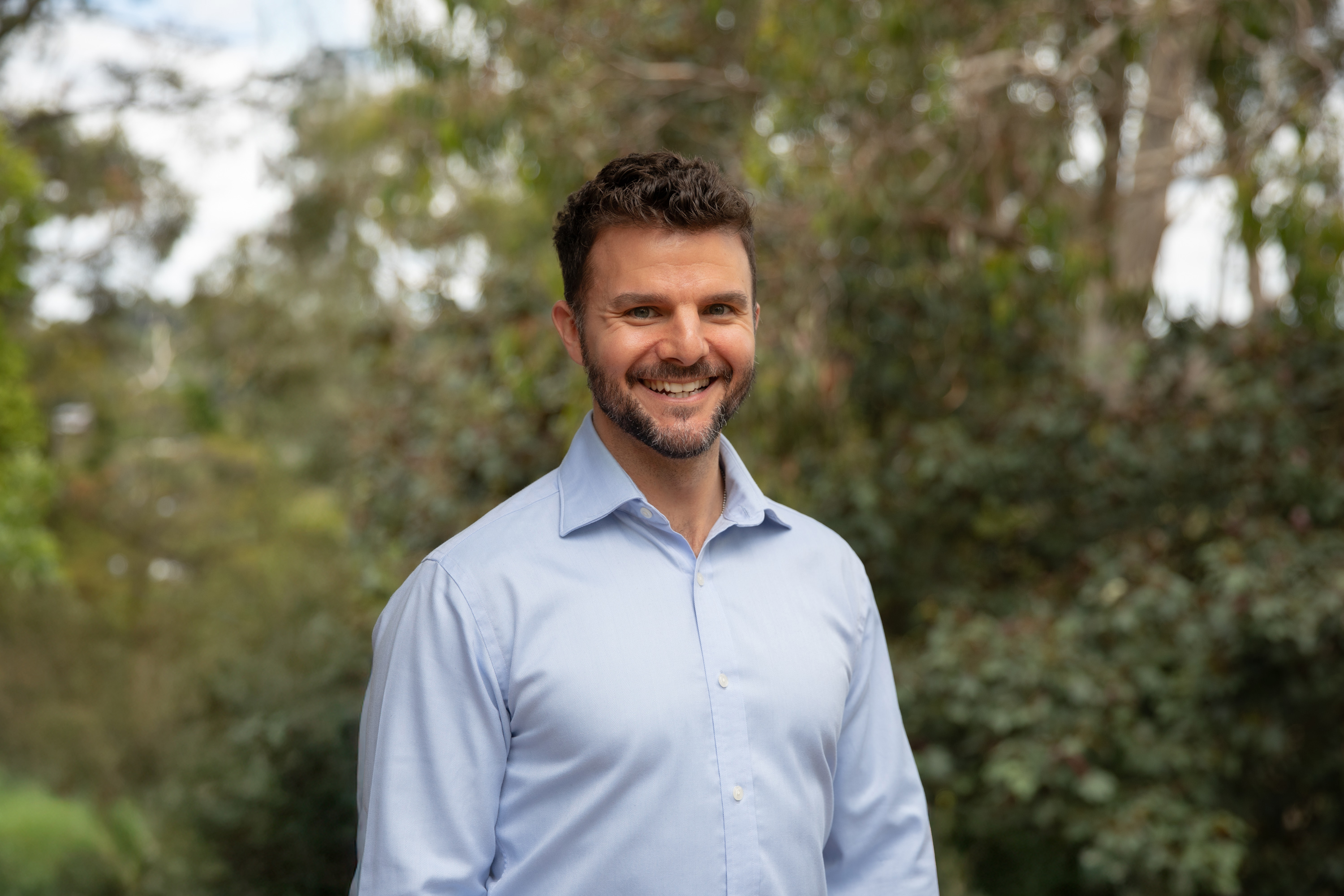
Sean draws on over 20 years professional experience in high performance, safety-critical industries when supporting clients through life’s challenges.
His approach focuses on helping others rebuild their own foundations and navigate successfully towards meaningful progress.